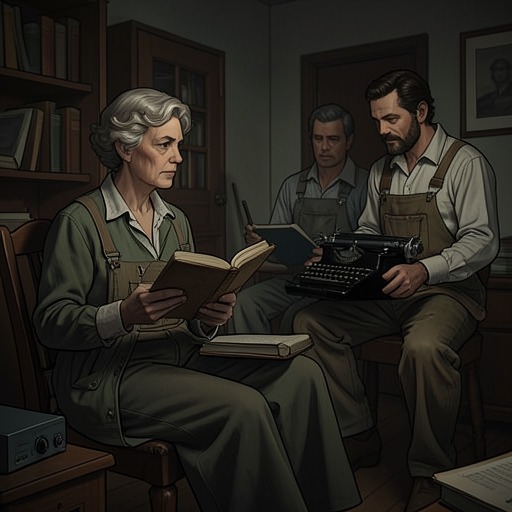
Frances and Tony’s growing attraction
Nine Perfect StrangersFrances and Tony’s growing attraction takes shape through small acts of attention rather than a single declaration: a teasing question, a half-hidden smile, a conversation that turns unexpectedly candid, and Tony’s willingness to ask about the hurt Frances has kept private. Their developing connection offers each a listener at a moment of uncertainty, though the evidence here establishes growing intimacy rather than a final romantic outcome.
First Signs of Mutual Interest
When Zoe asks whether Tony was called Smiley Hogburn because he smiled often or hardly ever, Tony answers that he used to smile a lot, describing his younger self as happy-go-lucky. Frances is surprised by the contrast with the unsmiling man before her. Her attention is not simply social: when she later tells the group that she has seen Tony’s tattoos, he puts a finger to his lips as though they share a secret. Frances wonders whether he is flirting, then quickly clarifies that she saw the tattoos accidentally and glances nervously toward Masha. The exchange leaves the attraction tentative and self-conscious, with Frances noticing the possibility before she knows how to respond to it.
Conversation as a Form of Intimacy
A later scene gives their closeness more room. Tony sits on the floor beside Frances and checks whether she is all right as she presses a damp towel to her forehead during a wave of heat. She thanks him, then deliberately tries to distract him by asking whether he experienced post-sports depression after giving up football. Her question is awkwardly direct, but its curiosity turns the conversation toward the losses and changes that have shaped him.
Tony explains that, in some games, the players were all where they were meant to be and everything came together like music or poetry; the experience could feel transcendent. Frances does not dismiss this as sentimentality. She says it makes her want to take up Australian football, meeting his vulnerability with interest rather than ridicule. His appreciative chuckle marks a small but important response: he has risked describing something difficult to convey, and she has taken it seriously.
Work, Vulnerability, and Shared Attention
The conversation moves from Tony’s playing career to the life he built afterward. He says that his sports marketing consultancy has done well, but calls himself an amateur human being, comparing his experience with teammates whose lives went badly. Frances asks how he recreated himself after retiring, making his transition a subject of genuine interest. When Tony admits his former wife said he thought only about the game, Frances instinctively reassures him that it must have been enjoyable being married to him, then catches herself staring at his shoulders and hurriedly changes the subject. Her response combines sympathy with unmistakable physical awareness, while her quick retreat shows that the attraction still makes her self-conscious.
Trust in a Confined Moment
Tony also tells Frances about a medical appointment just before Christmas. When his doctor gave him the results, Tony found himself thinking, in his own words, “Let it be terminal.” Frances blanches and asks whether it is; he reassures her that he is fine, though he acknowledges his lifestyle is unhealthy. The disclosure is not a claim that he has a terminal illness: its significance lies in Tony sharing the shock of his own thought and Frances responding with immediate concern. In the same difficult stretch, he asks her to tell him about the man who scammed her and where he lives. The abrupt, protective question makes clear that his interest has become personal: he wants to hear about the injury she has suffered and to stand on her side.
The Shape of the Relationship
Their connection develops through an exchange of attention. Frances notices the man behind Tony’s former public image and asks about the emotional cost of leaving football; Tony answers openly, then turns toward the story of Frances’s betrayal. Humor, embarrassment, and concern coexist: she can be surprised by him, flirt without intending to, and still bring him a serious question, while he can share professional pride, regret about his marriage, and fear prompted by a doctor’s results. These scenes establish attraction as a growing trust built in conversation. They do not, on their own, establish a later commitment or the relationship’s eventual outcome.